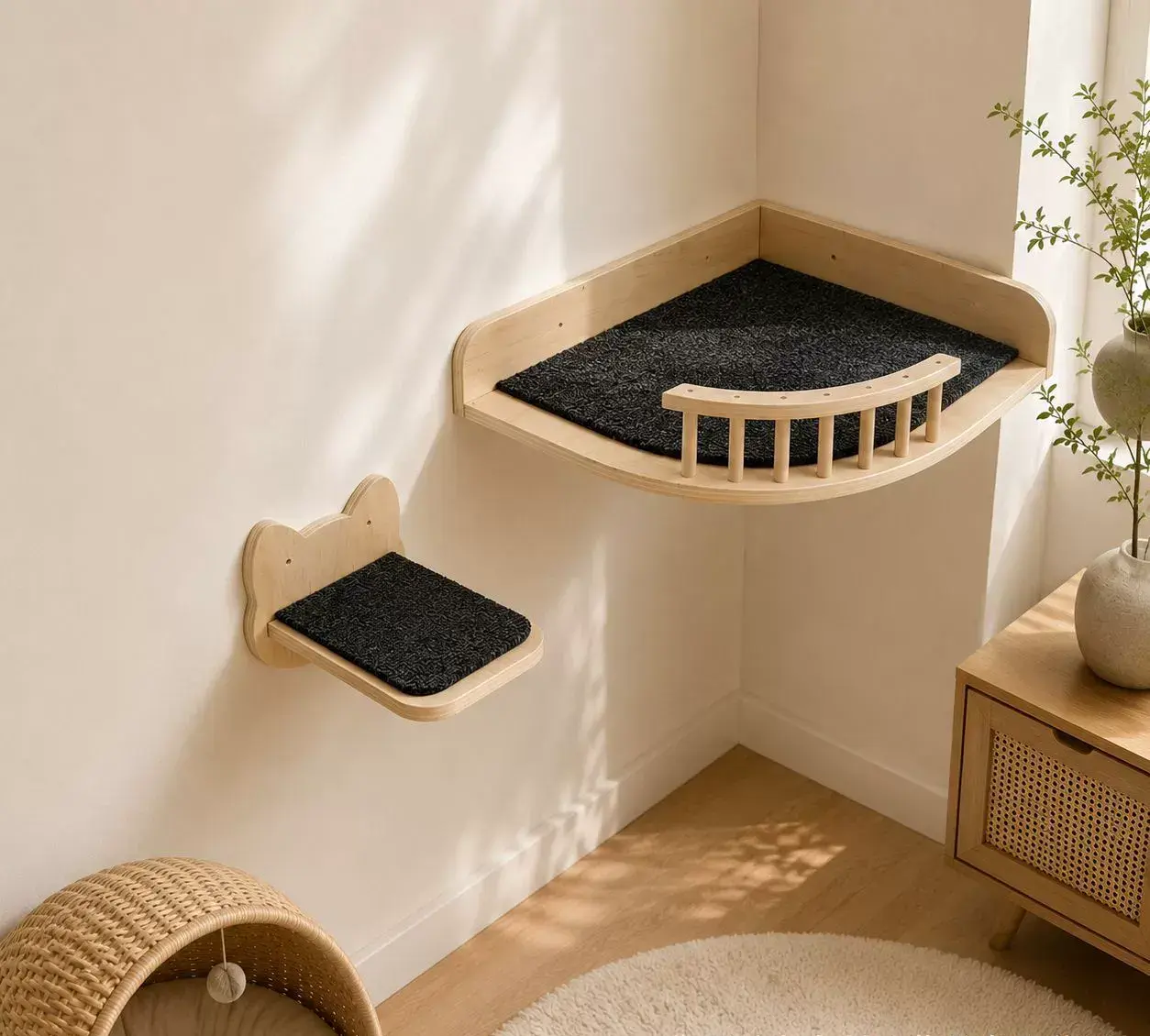
Sisal vs Carpet Scratching Posts: Which Lasts Longer?

A professional, test-based comparison of the two most common cat tree materials — helping pet brands and retailers choose surfaces that satisfy cats and survive years of daily use.
Key Factors That Determine Scratching Post Lifespan
Durability is not just about the surface material — construction, fibre density, and installation method all influence how long a post performs.
Materials & Construction: What Really Lasts
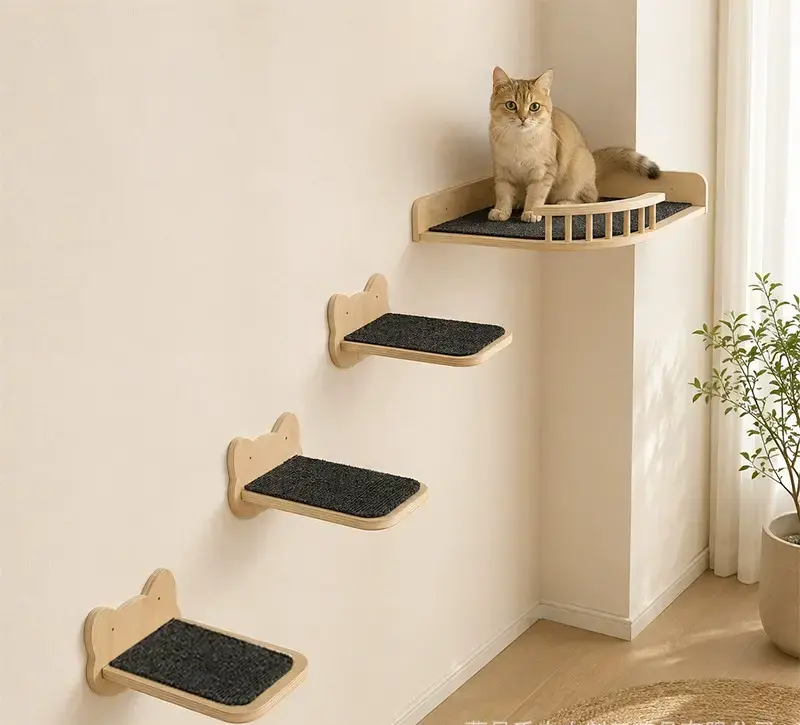
When evaluating a sisal scratching post against a carpet cat tree, the first variable to isolate is material construction. Sisal is a natural leaf fibre with high tensile strength and excellent abrasion resistance. In a quality scratching post, sisal is wound tightly around a rigid core — usually solid wood or high-density cardboard — with consistent tension and minimal gaps. This tight winding is critical: loose or uneven wraps create high-friction points that fray quickly and can even trap claws. Premium manufacturers use multi-ply sisal rope with a uniform diameter, often 6–8 mm, and secure the ends with concealed staples or adhesive so cats cannot pull strands loose. The result is a surface that shreds gradually rather than failing suddenly, giving cat owners months or years of service depending on scratching frequency. Carpet, by contrast, is a broad category. A carpet cat tree may use loop-pile, cut-pile, or Berber-style carpet, and durability varies enormously. Dense, short-pile carpet with a strong synthetic backing performs well because claws cannot easily snag individual tufts. Cheap, loose-pile carpet — often used to hit low price points — mats, pills, and sheds within weeks. The backing matters as much as the face fibre: a robust woven or non-woven backing prevents delamination when cats pull and twist. Construction details also influence longevity. Posts should be anchored to a stable base with locking hardware, not just glued. Platforms and perches should be load-tested, and all edges should be rounded or wrapped to prevent injury. For wholesale cat furniture buyers, the takeaway is that neither material is inherently superior; the specification is what determines lifespan. A well-built sisal post and a well-built carpet cat tree can both last for years, while poorly specified versions of either fail quickly. GMTPET approaches both materials with the same engineering discipline: controlled winding tension for sisal, and dense, commercial-grade carpet with reinforced backing for carpeted models. This consistency is what allows our OEM and wholesale partners to promise durability in their own markets.
Sisal vs Carpet: Performance Specifications at a Glance
A practical comparison based on typical GMTPET production standards for wholesale cat furniture.
Customisation and OEM Process for Wholesale Cat Furniture
For brands and retailers, the choice between a sisal scratching post and a carpet cat tree is often less about picking one and more about building a product line that covers both preferences. That is where an experienced OEM partner adds value. At GMTPET, the customisation process begins with a specification workshop: we ask about your target market, price band, cat size assumptions, packaging format, and compliance requirements. From there, our design team proposes material combinations — for example, a sisal-wrapped main post with carpeted platforms, or a fully carpeted cat tree with a replaceable sisal sleeve. This hybrid approach is increasingly popular because it satisfies cats that prefer different textures and extends overall product life. Customisation extends well beyond the surface material. Buyers can specify post diameter (typically 8–15 cm), overall height (from compact 40 cm posts to 180 cm cat trees), base dimensions and weight for stability, platform shapes, hidey-house sizes, and toy attachments. Colour matching is available for both sisal — natural, bleached, or dyed — and carpet, with Pantone references accepted. Branding options include woven labels, printed hangtags, custom carton design, and even embossed base plates. The OEM workflow is structured to reduce risk. After specification sign-off, we produce a pre-production sample for physical approval. Once approved, we finalise the bill of materials, conduct a small pilot run if needed, and then move to mass production. Throughout the process, buyers receive photo and video updates at key milestones. For wholesale cat furniture programmes, we also support mixed-container loading so partners can combine sisal posts, carpet cat trees, and accessories in a single order. This flexibility is particularly valuable for distributors and private-label brands that need to test multiple SKUs without committing to full container loads of each. Our engineering team also offers value engineering: if a target price is tight, we propose alternative constructions that preserve durability — such as a slightly smaller post diameter with higher-density sisal, or a carpet cat tree with reinforced high-wear zones — rather than simply downgrading materials across the board. The goal is to protect your brand reputation while hitting your margin requirements.
Quality Control and Compliance: Protecting Your Brand
Durability claims are only credible if they are backed by consistent quality control. For both sisal scratching posts and carpet cat trees, GMTPET applies a multi-stage QC process that begins with incoming material inspection. Sisal rope is checked for fibre length, colour consistency, tensile strength, and moisture content; carpet is inspected for pile density, backing integrity, and colour fastness. Any batch that fails these checks is rejected before production begins. During production, in-line inspections monitor winding tension on sisal posts, adhesive coverage, staple placement, and carpet cutting accuracy. Posts are periodically pull-tested to ensure the surface will not detach under load. Platforms and bases are checked for squareness, hardware alignment, and stability. After assembly, finished goods undergo a final inspection that includes a wobble test, a visual check for loose fibres or exposed staples, and a packaging audit. We also conduct drop tests on packaged cartons to simulate transport conditions, which is particularly important for wholesale cat furniture shipped in containers. Compliance is a core part of the programme. Depending on the destination market, products can be tested to EN 71-3 for heavy metals in accessible materials, REACH for restricted substances, and California Proposition 65 where applicable. Adhesives and dyes are selected to meet these standards, and test reports are available for buyer review. We also maintain traceability records so that if a material issue arises, affected batches can be identified quickly. For buyers, this QC and compliance infrastructure reduces the risk of returns, chargebacks, and reputational damage. It also supports marketing claims: when a retailer states that a sisal scratching post is built for durability, there is documented testing behind that statement. GMTPET provides inspection reports and, where required, third-party lab certificates to support your product listings and marketplace compliance. This level of documentation is especially valuable for Amazon sellers and European retailers, where product safety and material declarations are scrutinised closely.
Frequently Asked Questions
Practical answers for buyers comparing sisal and carpet scratching surfaces.
Which lasts longer: sisal or carpet?
Do cats prefer sisal or carpet?
Can I combine sisal and carpet in one cat tree?
What is the MOQ for wholesale cat furniture?
What is the typical lead time?
Do you provide compliance certificates?
MOQ, Lead Time, Packaging, and Shipping
Understanding the commercial framework is essential when comparing sisal and carpet options for wholesale cat furniture. MOQ at GMTPET is structured to support both emerging brands and established distributors. For standard catalogue designs, MOQ typically starts at 100–300 pieces per SKU, depending on the model’s complexity and material mix. Custom colours, custom cartons, and unique platform shapes may raise the MOQ slightly because they require dedicated production runs and material procurement. For buyers who want to test multiple designs, we offer mixed-container loading, allowing several SKUs to be combined in one shipment. This is a practical way to launch a cat tree materials range — for example, a sisal scratching post line alongside a carpet cat tree line — without overcommitting to any single item. Lead time is another critical factor. After sample approval and receipt of deposit, standard production takes approximately 25–35 days. Orders with extensive customisation, such as dyed sisal, printed packaging, or new tooling for platform shapes, may require 35–45 days. During peak season, we recommend confirming capacity early and locking in production slots. We provide a production schedule at order confirmation and share progress updates with photos at key milestones. Packaging is designed for e-commerce and retail alike. Standard options include brown or white cartons with line art, full-colour printed cartons, and mail-order-ready packaging with reinforced corners and internal protection for posts and bases. We can include assembly instructions, hardware bags, and branded inserts. For marketplace sellers, we support packaging that meets Amazon’s requirements, including barcode labelling and poly-bagging where needed. Shipping is coordinated through our logistics partners. We offer FOB, CIF, and DDP terms depending on the destination and buyer preference. For wholesale cat furniture, ocean freight is the most economical option, and we optimise carton dimensions to reduce container space and shipping costs. Air freight and express options are available for urgent sample orders or small launches. Our team provides loading plans and container utilisation reports so buyers can see exactly how their order is packed. Throughout the process, a dedicated account manager coordinates sampling, production, QC, and shipping, giving buyers a single point of contact. This end-to-end support is particularly valuable for brands entering the cat furniture category for the first time, as it reduces the learning curve and helps avoid costly mistakes in specification, packaging, or logistics.
What Our Wholesale Partners Say
Feedback from brands and distributors who have launched sisal and carpet cat furniture with GMTPET.
Ready to Choose the Right Scratching Surface for Your Range?
Whether you need a durable sisal scratching post, a plush carpet cat tree, or a hybrid design, GMTPET provides OEM and wholesale cat furniture with tested materials, flexible customisation, and reliable lead times. Contact our team to request samples, discuss specifications, or plan your next order.
Product Video
Related Products / Categories
Share